ADT+
- 4.7
- Rating
- 100.00K
- Installs
- Free
- Price

 Analysis by App-foxy
I look at ADT+ as a home-security companion rather than a standalone gadget app. Its job is to bring the ADT experience closer to your phone, so checking on your home feels less tied to a wall panel or a fixed routine. I found that approach most useful when I wanted a quick way to stay connected with home activity while away, without treating the app like a general-purpose smart-home dashboard.
Developed by ADT LLC ®, this free lifestyle app is aimed at people who already use ADT services or are considering an ADT-centered setup. It is available for everyone from an age-rating perspective, and the current release is version 4.3.0.328531, requiring at least iOS or Android 12. Those requirements matter: the app is not a good fit for an older phone that cannot be updated, even though the service itself is intended for ordinary household use.
How ADT+ feels in everyday home-security use
My first impression is that ADT+ makes the most sense when it is part of a broader ADT installation. The phone becomes a convenient point of contact for the security system, rather than replacing the equipment, service, or professional setup around it. That distinction is important because someone downloading it in search of a completely independent security solution may come away disappointed.
You May Also Like

 AccuWeather: Weather Radar
AccuWeather Review: A Quick, Clear Forecast for Everyday Decisions
For everyday plans, the best forecast is the one you can understand quickly. AccuWeather makes rain timing, radar, and local conditions easy to act on, with a few trade-offs.

 Hill Climb Racing
Why Hill Climb Racing Still Turns Crashes Into One More Run
A tiny car, a bumpy hill and one more upgrade: Hill Climb Racing keeps resurfacing because its simple chaos makes every near-miss feel personal.

 AliExpress - Shopping App
AliExpress Makes Global Shopping Feel Personal, but Shoppers Bear the Risk
AliExpress turns a global marketplace into a pocket-sized discovery engine. Its reach is useful, its shopping loop compelling, and its trade-offs easy to miss.

 Lords Mobile: Kingdom Wars
Lords Mobile Is a Kingdom-Building Routine, Not a Quick Match
A case-by-case verdict on the building, battles, device demands, and social commitments that make Lords Mobile rewarding for some players and exhausting for others.

 PDF Scanner app - TapScanner
TapScanner Makes Paperwork Easier to Capture, Check, and Share
TapScanner makes scanning with a phone feel less like a rescue operation and more like a dependable step in getting work done. Its capture tools are useful, though not flawless.

 Block Blast!
 Shows How Much a Puzzle Game Can Leave Out
A quiet grid game shows why puzzle players increasingly value instant clarity, repeatable skill and low-pressure play—and where the genre still needs to catch up.
More From Our News Desk
View All News


For an existing customer, the practical benefit is convenience. I can imagine using the app before leaving for work to check that the home is in the expected security state, then checking again after arriving somewhere for the day. The value is not in spending time inside the app; it is in reducing the number of moments when I have to wonder whether I remembered to secure the house.
That makes ADT+ particularly suitable for households where more than one person needs visibility. A partner, parent, or trusted family member may want a simple way to stay informed without learning a complicated control system. The experience is more useful when everyone agrees on how the home should be secured and who is responsible for responding to an alert.
The strongest reason to use ADT+ is the connection between reassurance and routine. A security app earns its place when it helps me make a decision quickly: leave, check, respond, or contact someone. If I have to explore several screens to understand what is happening, the app becomes another source of stress. ADT+ is best judged by how naturally it fits those short, high-attention moments.
A realistic morning and evening workflow
Consider a typical weekday. I am leaving in a hurry, carrying a bag and trying not to forget anything. Instead of returning to the house to double-check the system, I can use the phone as a final confirmation point. Later, if a family member arrives before me, the household can follow an agreed routine rather than relying on a last-minute message asking whether the system was handled.
In the evening, the same app can become part of a closing routine. I check the home before going to bed, especially after a busy day when doors, windows, or household habits may not have followed their normal pattern. This is a small use case, but it shows why a dedicated security app can feel more useful than a collection of unrelated smart-home controls.
The trade-off is that convenience depends on the rest of the ADT setup working properly. A phone interface cannot compensate for poor placement of equipment, unclear household procedures, or a user who ignores notifications. I would treat the app as one layer of a security plan, not as proof that every possible risk has been solved.
Who will get the most from it
I would recommend ADT+ first to current ADT customers who want a more accessible way to interact with their home-security service. It is also a sensible option for people who prefer one established security ecosystem instead of assembling separate products from several brands. That unified approach can reduce the mental load of remembering which app controls which part of the home.
It may also suit users who value a familiar mobile experience over a dedicated control panel. A phone is usually nearby, so the app can feel more natural for quick checks. Older relatives or less technical household members may appreciate having a recognizable device in hand, although the overall setup should still be explained clearly before anyone is expected to respond to an alert.
I would be more cautious for renters, people who move frequently, or anyone who wants a security system that can be installed and changed without depending on a provider-centered arrangement. The app is not the obvious choice for someone who only wants a low-cost camera viewer or a basic do-it-yourself alarm. In those cases, a simpler product may involve less commitment and fewer decisions.
What the current release tells me
The present version, 4.3.0.328531, shows that ADT+ is an actively maintained product rather than an abandoned companion application. I see that as encouraging, but I would not confuse a newer version number with a guarantee that every workflow is perfect. Updates can improve stability and polish while leaving the larger question of whether the service matches a particular household unchanged.
The app was released on December 7, 2022, so it has had time to establish itself as part of ADT’s mobile experience. Its current store presence suggests a product that has moved beyond a first experiment. At the same time, the most important evaluation is still personal: does the app make your existing security routine clearer, faster, and easier to follow?
Its audience appears substantial, with more than one hundred thousand installs and a 4.7 average from roughly ten thousand ratings. Those figures make the app worth taking seriously, but they do not remove the need to check compatibility and service fit. A highly rated companion app can still be the wrong choice if you do not use the related ADT system or if your phone runs an older operating system.
How the evolution affects existing users
For someone already using an earlier version, the main benefit of staying current is access to the present app experience and ongoing maintenance. I would update before judging the service, especially if an older installation feels slow, inconsistent, or confusing. Keeping the app current also avoids evaluating yesterday’s interface when the actual product has moved forward.
However, updating is not the same as relearning the entire security system. Existing users should approach a new version methodically: open the app when they are not rushed, review the main controls, confirm that household members understand the routine, and make sure the phone itself is protected. A security app is only as dependable as the habits surrounding it.
I also recommend checking the experience after a normal day rather than only during a test. The useful questions are practical: Can I understand the home’s state at a glance? Do I know what action I am expected to take? Can another person in the household follow the same process? These questions reveal more than simply noticing that the interface looks newer.
One non-obvious advantage of this approach is that it exposes responsibility gaps. If everyone assumes someone else will check the home, even a well-designed app will not fix the problem. I would use ADT+ to establish a clear household rule, such as deciding who handles the final check on travel days and who is the backup contact when the usual person is unavailable.
Where ADT+ is less convincing
The largest limitation is the app’s dependence on an ADT-centered setup. It is not a universal control room for every brand of camera, alarm, lock, or sensor. If your home already contains a mix of unrelated products, you may prefer a broader smart-home platform that brings more devices together, even if that means accepting a less specialized security experience.
There is also a difference between monitoring and understanding. A mobile app can put information in front of me, but it cannot make ambiguous household activity automatically meaningful. A notification may require context: who is home, what time it is, whether a family member changed the usual routine, and what response has been agreed in advance. Users who expect the app to make every security decision for them should adjust those expectations.
Another point is commitment. A dedicated security service can be reassuring because it is organized around protection rather than casual device control, but that focus may feel excessive to someone who only wants to watch a pet or receive a simple movement alert. For a small apartment with modest needs, a lightweight camera app might be easier to manage. For a larger home or a household wanting a more structured security arrangement, ADT+ becomes more compelling.
The minimum operating-system requirement is another practical filter. Since the app needs version 12 or later, I would check the phone before planning around it. This is especially relevant for families sharing older devices or using a phone that no longer receives regular system updates. An app can be free to download and still require a hardware upgrade in real life.
Useful habits that make the app more effective
First, I would avoid treating the app as something to open only when I feel worried. Building it into predictable moments—leaving, arriving, and settling down for the night—makes its purpose clearer and reduces random checking. The goal is not to stare at a security screen; it is to create a repeatable decision process.
Second, I would test the household workflow when everyone is calm. Each person should know what the normal state looks like and what they are supposed to do if something seems unusual. This is more valuable than simply installing the app on several phones, because multiple phones without shared expectations can create duplicated or missed responses.
Third, I would keep the phone itself in the security conversation. A locked device, sensible notification settings, and a charged battery are basic but important. If the only person who can interpret the app is unreachable, the household has a people problem rather than an app problem. I would make sure a trusted backup person knows the agreed process.
Finally, I would review the experience after changing routines, moving furniture, adding household members, or spending more time away from home. Security arrangements become outdated quietly. ADT+ can be a useful prompt to revisit those assumptions, but I would not expect the software to know that the family’s habits have changed unless someone actively updates the surrounding plan.
How it compares with familiar alternatives
Compared with a basic camera application, ADT+ feels more appropriate when the priority is a broader home-security relationship rather than viewing a live feed. A camera-first app may be cheaper or more flexible for a narrow task, while ADT+ makes more sense for a user who wants the phone experience connected to an ADT service.
Compared with a general smart-home hub, ADT+ has a clearer security identity. A broad platform may be better for mixing lights, thermostats, locks, and devices from different manufacturers. The downside is that a general hub can make security one feature among many. I prefer the ADT approach when protection is the main concern and I do not want the security workflow buried inside a larger collection of home controls.
Compared with a traditional panel-only experience, the phone app is more convenient for people who are often away from home or already organize daily tasks through their phone. The panel may still feel more direct for someone who prefers a fixed, physical point of control. I would not force a mobile workflow on a household member who finds phone-based security confusing; accessibility includes familiarity, not just the number of available features.
What I would watch before committing
I would pay attention to how the app behaves during the exact situations that matter to me, not just during a relaxed first launch. That means checking the clarity of the home status, seeing whether the navigation makes sense under pressure, and confirming that everyone who needs access can follow the same routine. A security product should be evaluated by its weakest realistic moment.
I would also watch future updates for improvements that reduce friction rather than merely changing the appearance. Clearer status information, more understandable actions, and better support for household roles would matter more to me than decorative redesigns. Since the current release is 4.3.0.328531, future changes should be judged against whether they make everyday decisions easier.
The app’s rating of 4.7 and roughly one thousand reviews indicate a positive reception, but I would still read recent user comments with a specific question in mind: are people describing the same setup and expectations I have? Reviews are most useful when they reveal recurring friction around compatibility, onboarding, notifications, or daily control—not when they simply confirm that the app looks good.
For prospective users, the key question is not whether ADT+ is free. It is whether the app belongs to a security arrangement that fits the home, the phone, and the people who will use it. The download cost is free, but the surrounding choice deserves more thought than a casual app installation.
My final take on ADT+
After looking at the product as a daily tool, I see ADT+ as a focused companion for ADT households that want security access to feel more immediate and less tied to a single location. It is not the right answer for every smart-home owner, and it should not be mistaken for a complete security plan by itself. Its value comes from making an existing ADT-centered routine easier to check and share.
I would recommend it to current customers, families that want a consistent mobile workflow, and users who prefer a dedicated security ecosystem over a patchwork of independent apps. I would skip it if I only needed a basic camera viewer, used an older phone below the operating-system requirement, or wanted broad compatibility across many unrelated smart-home brands.
My honest recommendation is to choose ADT+ when convenience supports a well-defined security routine, not as a substitute for one. Used that way, it can provide the calm, quick confirmation a phone app should provide. The app is free, rated for everyone, and maintained by ADT LLC ®, but the real decision is whether its focused approach matches the way your household protects and manages the home.
FAQs for ADT+
01What is ADT+ and what does it offer?
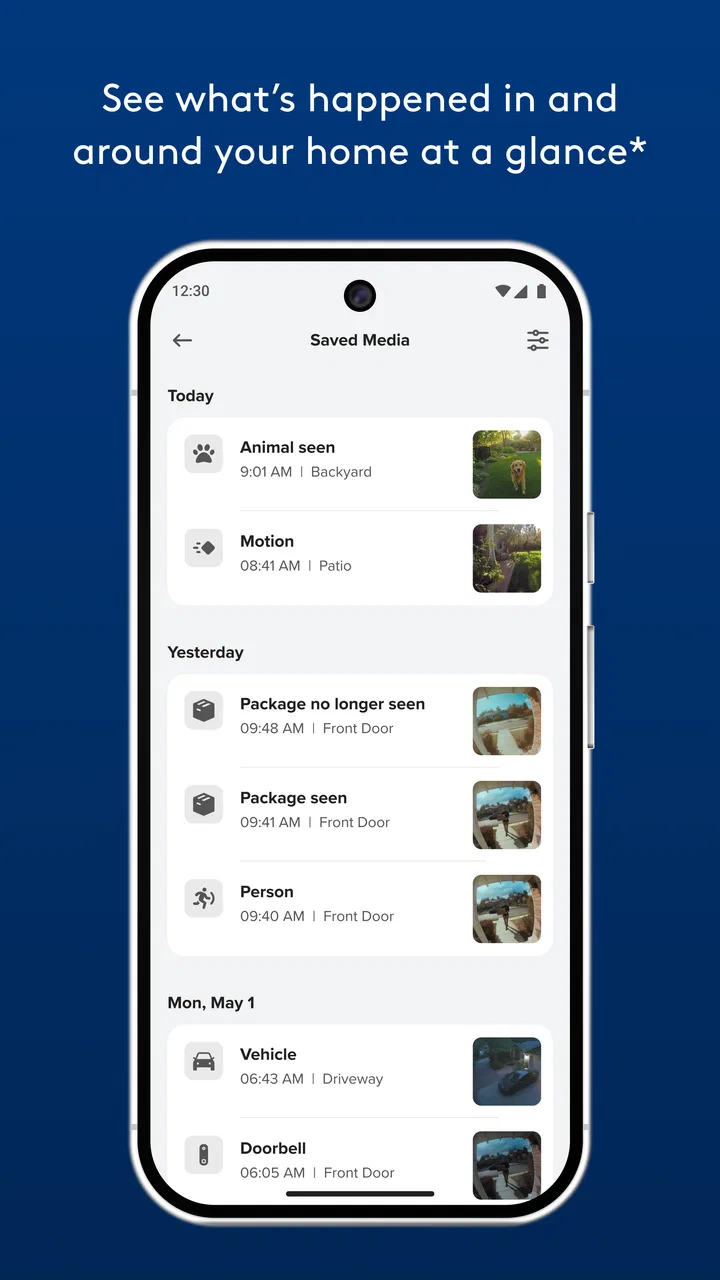
ADT+ is a comprehensive home security app that integrates with ADT's security systems. It offers real-time monitoring, remote access to cameras, and control over security settings. Users can receive instant alerts and manage their home security from anywhere using their smartphone or tablet.
02Is ADT+ compatible with all smart home devices?
ADT+ is designed to work seamlessly with a variety of smart home devices, including smart locks, cameras, and thermostats. However, compatibility may vary depending on the device model. It's recommended to check the app's compatibility list or consult with ADT support to ensure your devices are supported.
03How secure is the ADT+ app in protecting my data?
The ADT+ app employs advanced encryption and security protocols to protect user data and privacy. Regular updates are provided to address any vulnerabilities. Users are encouraged to use strong passwords and enable two-factor authentication for additional security.
04Does ADT+ require a subscription or additional fees?
While the ADT+ app itself may be free to download, it does require an active ADT security system subscription. Additional features or services, such as professional monitoring or cloud storage, may incur extra fees. It's important to review the pricing details before downloading.
05Can I control multiple properties with ADT+?
Yes, ADT+ allows users to manage and monitor multiple properties from a single account. This feature is particularly useful for homeowners with multiple residences or rental properties, providing centralized control and monitoring across all locations.
Pros
- User-friendly interface for easy navigation.
- Wide range of customizable alert options.
- Real-time notifications for quick response.
- Seamless integration with smart home devices.
- Comprehensive support and resources available.
Cons
- Requires a stable internet connection.
- Subscription model may be costly long-term.
- Limited offline functionality.
- Occasional delays in push notifications.
- Initial setup can be time-consuming.

ADT+
Gallery